When a tooth has been weakened by decay or small fractures, a dental filling restores its shape and function so you can chew comfortably and protect the remaining structure. Fillings are among the most common restorative procedures in dentistry because they arrest decay, rebuild damaged areas, and help prevent more extensive treatment later on.
A modern filling does more than just fill a hole — it seals the tooth against bacteria, helps maintain proper bite relationships, and preserves your natural tooth whenever possible. With advances in materials and adhesive techniques, today's restorations can be both durable and discreet, blending with your smile while standing up to daily wear.
At the office of All Bright Dental PC, our focus is on using techniques and materials that conserve healthy tooth structure while delivering long-term results. We’ll explain the options available for your situation and recommend a treatment plan that balances strength, esthetics, and longevity.
Human attempts to repair damaged teeth date back millennia, but restorative dentistry took dramatic leaps in the 1800s with the introduction of metal alloys and, later, dental amalgam. Amalgam offered a practical, long-lasting solution for many decades, valued for its durability in high-stress chewing areas.
Over the last half-century, however, materials science has changed the landscape of restorative care. Tooth-colored composites, ceramics, and other non-metallic options now allow dentists to provide repairs that are both strong and visually unobtrusive. This shift reflects a larger emphasis on conservative dentistry and patient preferences for natural-looking restorations.
Choosing a filling is a balance between mechanical requirements and cosmetic goals. For some areas of the mouth, strength and wear resistance are paramount; in other places, color and contour are more important. Our clinical decisions consider the size and location of the cavity, your bite, and how the restored tooth will function over time.
We also prioritize techniques that preserve healthy tooth structure. Adhesive bonding systems and minimally invasive preparation methods help keep more of your natural tooth intact, which supports overall oral health and reduces the likelihood of future problems.

Not all fillings are created equal. Different materials offer distinct advantages — some prioritize durability for back teeth, others prioritize appearance for front teeth, and a few provide additional benefits like fluoride release. Understanding the broad categories can help you make an informed choice with your dentist.
When we discuss options, we consider factors such as the extent of the decay, whether the tooth will require additional reinforcement, aesthetic priorities, and how the restoration will perform under chewing forces. Each material has trade-offs, and the right selection depends on the clinical situation.
Below are common categories of filling materials and the situations in which they are typically used. This overview will help you understand why a particular material may be recommended for your treatment.
Composite resins are a blend of durable polymers and finely ground glass fillers that are matched to your tooth shade. They bond to enamel and dentin, which can strengthen the remaining tooth and allow for more conservative preparations.
Because composites are sculpted and cured in layers, they are especially useful for visible areas and smaller to moderate cavities. They resist temperature-related expansion and can be repaired when necessary, though they may require replacement sooner than some indirect options if heavily loaded or exposed to staining agents.
Amalgam has a long track record for durability and is resistant to fracture in high-pressure chewing zones. While its metallic appearance makes it less popular for front teeth, it remains a reliable choice for large restorations in back teeth where strength is a priority.
Glass ionomer materials chemically bond to tooth structure and release fluoride over time, which can help protect the surrounding enamel. They are often used where moisture control is difficult, for small restorations in primary teeth, or as temporary or transitional restorations.
Ceramic restorations are fabricated outside the mouth and cemented or bonded in place; they offer excellent color stability and wear resistance. Because they are made from high-strength porcelain, ceramics combine longevity with superior esthetics for larger posterior or anterior restorations.
Gold alloys remain one of the most durable and biocompatible restorative materials available. They are less commonly selected today due to cost and appearance, but gold offers exceptional longevity and a gentle fit with opposing teeth when used appropriately.
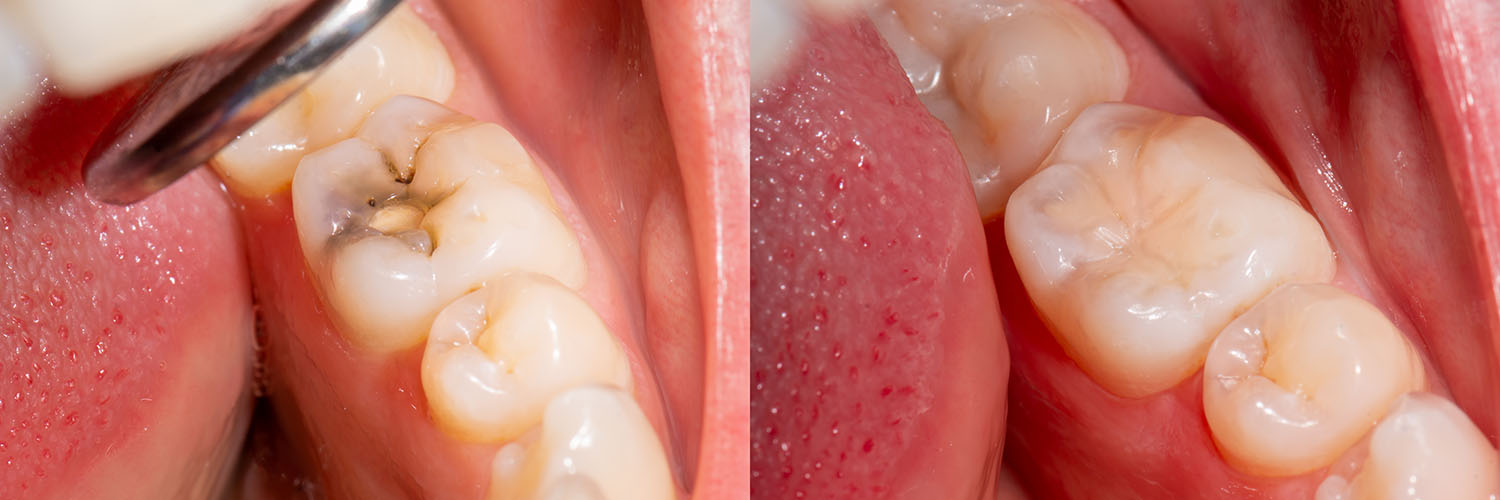
A typical filling visit begins with a careful assessment of the affected tooth, including X-rays when needed to determine the depth and extent of decay. We will review the findings with you and outline the recommended approach so you know what to expect.
>Most fillings are placed under local anesthesia so the area is numb and the procedure is comfortable. We remove the decayed tissue and shape the remaining tooth as conservatively as possible, then place the chosen material using techniques tailored to that material — whether bonding and layering composite or fitting a pre-made inlay.
Depending on the material, the filling may be completed in a single appointment. For larger or indirect restorations, we may place a temporary restoration while a ceramic or gold piece is fabricated. Throughout the process, we check your bite and make precise adjustments to ensure the restored tooth fits smoothly with your natural chewing pattern.
If dental anxiety is a concern, we offer options to help you feel at ease during treatment. Please let our team know about any preferences or questions so we can accommodate your needs and make the experience as calm and efficient as possible.
After a filling is placed, it's normal to experience mild sensitivity or a brief period of adjustment as your mouth gets used to the restored tooth. This typically resolves on its own over days to a few weeks. Maintaining excellent oral hygiene and avoiding excessively hard foods immediately after treatment supports good outcomes.
Some practical points to keep in mind right away: allow any numbness to wear off before eating to avoid accidental biting, be gentle with chewing on the treated side for the first day if advised, and follow any specific home-care instructions provided by your dentist. Routine dental checkups let us monitor the restoration and the health of the surrounding tooth.
Contact our office if you notice persistent or worsening pain, sensitivity that increases rather than improves, a high bite, or visible changes in the restoration. Early evaluation helps address issues before they become more significant.
Protect the numb area:
Wait until sensation returns before eating or drinking hot beverages to avoid accidental injury to lips, cheeks, or tongue.
Expect brief sensitivity:
A slight reaction to cold or pressure is common and usually temporary. If sensitivity persists or pain increases, notify us for an assessment.
Care for the restoration:
Brush and floss as normal, and be mindful of habits like chewing ice or opening packages with your teeth, which can stress restorations over time.
We aim to provide durable restorations that support long-term oral health. With routine preventive care and sensible habits, most fillings continue to function well for many years.
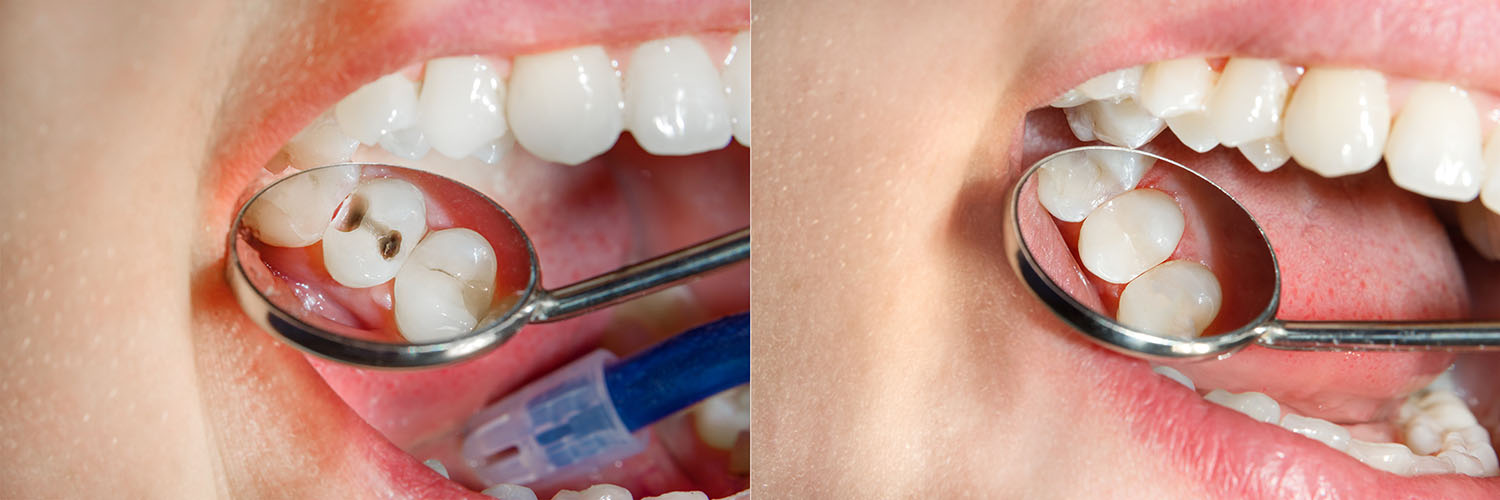
In summary, dental fillings are a foundational treatment for stopping decay, preserving tooth structure, and restoring comfortable function. Whether your priority is strength, appearance, or a balance of both, our team will guide you through the choices and tailor care to your needs. Contact us for more information or to discuss how a modern filling can protect your smile.


If the pleasure of eating a delicious bowl of ice cream or sipping a soothing cup of tea gets overshadowed by dental pain that makes you wince; it's time to contact our office. As skilled providers of care, we'll determine what's causing your discomfort and perform the treatment required to alleviate your symptoms and get you back on the road to oral health.
Cavities develop because of an infectious process that causes progressive damage to tooth structure. Despite starting as a pinpoint defect on the outermost enamel layer of your tooth, untreated dental decay progressively compromises more and more healthy tooth structure as it works its way to the inner layers of your tooth.
Yes, you can still develop tooth decay on other surfaces of the tooth, around the margins of an old filling, or in fewer instances, recurrent decay underneath it. For this reason, it's essential to maintain excellent oral hygiene, a diet low in sugary beverages and sweets, and be sure to visit our office for routine checkups and care. While tooth decay is second only to the common cold in frequency, it's almost entirely preventable.
We value the time and comfort of our patients. If cavities are located on adjacent teeth, or in the same section of your smile, it may be possible to treat more than one tooth during your visit. However, how much is done each visit depends on several factors. We keep our patients well informed and tailor every treatment plan and visit to address their unique needs.
Addressing concerns on the presence of elemental mercury in silver fillings, the American Dental Association (ADA), The Center for Disease Control and Prevention (CDC), the FDA, and the World Health Organization have all stated that amalgam restorations do not pose a risk to health. However, individuals with allergies or sensitivities to the metals in dental amalgam are advised to pursue other restorative options.
Dental fillings are performed under local anesthesia to help ensure your comfort throughout the entire procedure. The involved tooth remains completely numb for the extent of your visit. Within one or two hours after the procedure is completed, the local anesthetic will gradually wear off, and normal sensations return.
A tooth-colored composite filling is fully hardened and set by the end of your visit. However, we may advise you to wait a couple of hours until the local anesthesia has completely worn off. This advice is to help ensure you don't accidentally bite your lip, cheek, or tongue while still numb.
The lifetime of a dental filling varies depending on the type of material used. While popular dental materials can last a decade or more with proper care, they can degrade over time, wear down, or even break. When this happens, you may experience some tooth sensitivity, a jagged edge, or a loose or dislodged piece of filling material. Whatever the case may be, it's essential to get the filling replaced before the tooth sustains further damage or other consequences arise. Beyond taking good care of your smile to help ensure the longevity of your fillings, our office regularly checks the status of your existing fillings as part of a routine checkup exam.
Dental fillings are an essential investment that serves to preserve and protect the health of your smile. With that said, how much a filling costs depends on the number of surfaces of the tooth involved and the filling material that is used. Amalgam restorations are the most economical. While tooth-colored composite fillings have a slightly higher cost, they offer the added benefits of being metal-free and much more aesthetically pleasing. Ceramic fillings, inlays, and onlays are more expensive than the preceding options but provide outstanding, long-lasting, and natural-looking results.
Dental insurances typically cover the cost of dental fillings. While we work with you to maximize your insurance benefits, there may still be an out-of-pocket expense. At the office of All Bright Dental PC, we strive to help you begin care without any additional financial stress or delay.
Dental fillings are restorative materials placed into a tooth to rebuild its natural shape and restore strength after decay or minor damage. They stop the spread of decay by sealing off the prepared area and restoring proper chewing function. Fillings can also correct small chips or wear that affect a tooth's appearance and function.
When tooth structure is weakened by caries or trauma, a filling preserves the healthy remainder of the tooth and helps prevent the need for more extensive treatment. The goal of treatment is to remove damaged tissue, restore the tooth's integrity, and maintain long-term oral health. At All Bright Dental PC, treatment decisions focus on preserving tooth structure and delivering reliable, natural-looking results.
Modern dentistry offers several restorative materials including composite resin, dental amalgam, glass ionomer cement, ceramic inlays or onlays, and gold. Composite resins are tooth-colored and bond to enamel and dentin, allowing conservative preparations and highly aesthetic results. Amalgam is a silver-colored alloy known for durability in high-stress areas, while glass ionomer releases fluoride and is useful for certain pediatric and root-surface applications.
Ceramic inlays, onlays, and indirect restorations provide superior aesthetics and wear resistance for larger defects, and gold remains a very durable option with excellent longevity. Each material has trade-offs in strength, wear characteristics, and appearance, so selection depends on the location of the cavity, the amount of remaining tooth structure, and the patient’s priorities. Your dentist can explain the best choice based on clinical needs and long-term prognosis.
Treatment begins with a clinical exam and any necessary radiographs to determine the extent of decay and plan the restoration. The tooth is then anesthetized locally to ensure comfort, and the decayed or weakened tissue is removed using a dental handpiece, laser, or air abrasion device depending on the case. Once the preparation is complete, the area is cleaned, isolated, and the chosen material is placed and shaped to restore anatomy and bite.
For direct restorations like composite, the material is placed in layers and cured with a light, then finished and polished. For indirect restorations such as ceramic inlays or onlays, an impression or digital scan is taken and the restoration is fabricated outside the mouth before being bonded at a second appointment. Final adjustments are made to ensure proper contact and comfortable occlusion.
Composite fillings offer excellent bond strength to tooth structure and allow for more conservative preparations compared with amalgam, which often requires more removal of healthy tooth. In many situations composites perform similarly to amalgam for small to medium-sized restorations and provide superior aesthetics because they match tooth color. However, composite materials can be more susceptible to wear and staining over long periods, especially in areas of heavy biting force.
Amalgam retains an advantage in some very large restorations and in patients with heavy bruxism because of its long history of durability. Advances in bonding agents and composite formulations have continually improved their strength and longevity, and many clinicians now use composites for most restorations where conditions are favorable. Your dentist will recommend the best material based on the size and location of the cavity, functional demands, and cosmetic goals.
The lifespan of a filling depends on the material used, the size and location of the restoration, the quality of the bond or fit, and the patient’s oral habits. Composite fillings typically last many years with proper care, while amalgam and gold restorations can last longer under heavy functional load. Ceramic inlays and onlays are highly wear-resistant and can offer durable results when well fabricated and bonded.
Oral hygiene, diet, parafunctional habits such as teeth grinding, and regular dental checkups all influence how long a filling will last. Promptly addressing small problems like marginal staining, roughness, or minor pain can prevent more extensive breakdown. Regular professional evaluations allow your dentist to monitor restorations and plan maintenance or replacement when clinically indicated.
Immediately after a filling you may have lingering numbness from the local anesthetic that can last an hour or two, and you should avoid chewing until sensation returns. It is common to experience temporary sensitivity to hot, cold, or pressure for a few days as the tooth adjusts, and mild discomfort usually resolves without intervention. If your bite feels uneven or you experience sharp pain when biting, contact the office so the dentist can make a simple adjustment.
Good oral hygiene and avoidance of very hard foods for a short period will help protect the new restoration as it settles. If you notice persistent pain, swelling, or prolonged sensitivity beyond a week, you should be evaluated promptly to rule out recurrent decay, a cracked tooth, or need for further treatment. Routine follow-up visits allow your dentist to assess the restoration and its margins over time.
Fillings may need repair or replacement if they become worn, fractured, loose, or if decay develops around the margins. Signs that a restoration needs attention include new or worsening sensitivity, rough or sharp edges, a visible gap between the filling and the tooth, dark staining at the margin, or a change in the way your teeth fit together. Early detection during routine exams often allows for simple repairs rather than complete replacement.
In some cases a larger restoration such as an inlay, onlay, or crown may be recommended when a filling no longer provides adequate strength or coverage for the remaining tooth. Your dentist will evaluate the extent of damage and discuss the most conservative option that protects long-term tooth health while restoring function and aesthetics. Timely treatment helps prevent more extensive procedures like root canal therapy or extraction.
Dental fillings are widely regarded as safe when placed appropriately, and many different materials are available to suit clinical needs and patient preferences. Amalgam contains elemental mercury combined with an alloy of silver, tin, and copper; when set, amalgam forms a stable compound with low mercury release for most patients. Major health organizations have reviewed the evidence and consider dental amalgam safe for the general population, while offering alternatives for patients who prefer mercury-free options.
If you have specific health concerns, allergies, or sensitivities, discuss them with your dentist so an appropriate material can be chosen. Modern tooth-colored materials such as composite resin, glass ionomer, and ceramics provide effective and aesthetic alternatives without mercury. Your dental team can explain the risks and benefits of each option and select the best solution for your clinical situation and peace of mind.
Children can receive many of the same restorative materials used for adults, but material choice often depends on the tooth involved, behavior management, and the expected lifespan of the primary tooth. Glass ionomer cements are frequently used in baby teeth because they bond well to dentin, release fluoride, and are forgiving in situations where long-term durability is less critical. Composite resins are also commonly used for pediatric restorations when aesthetics and a durable bond are desired.
When treating young patients, dentists consider factors such as cavity size, proximity to the gumline, cooperation level, and the timing of tooth exfoliation. Minimally invasive approaches and efficient appointments help reduce stress and improve outcomes for children. Your dentist can explain the best restorative option for your child and recommend preventive measures to reduce future cavities.
To prepare for a filling visit, review your medical history and current medications with the dental team, and let them know about any concerns such as dental anxiety or past adverse reactions to anesthetics. In most cases you can eat and drink as usual unless your dentist advises otherwise, and arriving a little early helps complete any paperwork and settle in comfortably. Bring a list of questions so you understand the planned procedure and aftercare instructions.
Local anesthesia is used routinely to keep the procedure comfortable, and many practices offer additional options for anxious patients such as nitrous oxide (laughing gas) or oral conscious sedation. For patients with severe anxiety, complex needs, or lengthy treatment plans, deeper sedation may be discussed and arranged with appropriate monitoring. Talk to your dentist about the sedation choices available and which option best matches your comfort level and medical history at All Bright Dental PC.

Have questions about your care or want to schedule an appointment?
We are here to make your dental care easy, comfortable, and convenient. Whether you have a question about our services, need help scheduling an appointment, or are ready to take the next step toward a healthier smile, we invite you to reach out. Our friendly team is always happy to assist you. Give us a call, send us a message, or fill out our online contact form. We look forward to hearing from you and welcoming you to our practice.