Being told a tooth needs a root canal can feel unsettling, but today's treatments are precise, predictable, and focused on comfort. Root canal therapy is designed to remove infected or damaged tissue from inside a tooth, relieve persistent pain, and preserve the natural tooth structure so you can chew, speak, and smile without compromise.
At the office of All Bright Dental PC, we combine modern instruments with a patient-centered approach to make the process as calm and efficient as possible. Our priority is to protect your oral health while minimizing discomfort, and we’ll explain each step so you feel confident about your care.
Keeping a natural tooth is almost always preferable to extraction when replacement options would be more invasive or require long-term maintenance. Root canal therapy removes the diseased tissue while leaving the outer tooth intact, which helps maintain proper bite alignment and supports the surrounding teeth and bone.
When a tooth is preserved and restored after treatment, it can continue to function for many years — often for the remainder of a patient's life. Preserving natural tooth structure also helps avoid the additional procedures and adjustments sometimes required with bridges, removable appliances, or implants.
Advances in endodontic techniques, digital imaging, and restorative materials have improved outcomes and reduced treatment times. Combined with careful follow-up restorations such as crowns, a treated tooth can return to full strength and reliability.

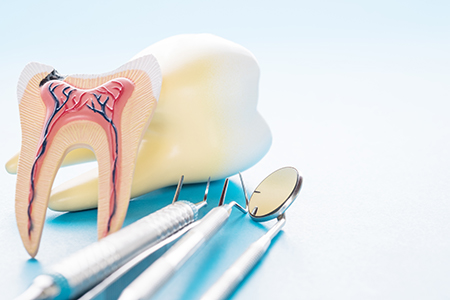
At the center of each tooth is the dental pulp, a soft bundle of nerves, blood vessels, and connective tissue that helps the tooth develop. When decay, cracks, or traumatic injury reach that inner space, bacteria can invade and inflame the pulp. Once the pulp is irreversibly injured or dies, the only reliable way to stop the infection and relieve pain is to remove that tissue.
Symptoms can vary. Some patients experience sharp or lingering pain, heightened sensitivity to hot or cold, or discomfort when biting. Others notice swelling, a darkening of the affected tooth, or simply feel that something isn't right in that area. In many cases, radiographic imaging during a routine exam reveals infection before obvious symptoms arise.
Our evaluation combines a careful clinical exam with diagnostic imaging to assess the extent of damage and determine whether root canal therapy is the best path forward. We prioritize preserving healthy tooth structure while addressing infection to prevent further complications.
Delaying care after signs of pulp involvement increases the chance that an infection will spread deeper into the jaw and surrounding tissues. Early intervention often allows for simpler treatment and better long-term results. Acting promptly can reduce the need for more extensive procedures later on.
Even when a tooth isn’t painful, underlying infection can cause bone loss or lead to persistent drainage and repeated swelling. Addressing the source early helps contain the problem and supports more predictable healing.
If a tooth is structurally compromised, timely root canal therapy preserves the option to rebuild the tooth with a crown or other restoration. The sooner a treated tooth receives its permanent restoration, the sooner it regains full function and resistance to fracture.
The procedure begins with a thorough review of your medical history and a focused exam. Local anesthesia is used to ensure the area is completely numb, and additional comfort measures are available for those with dental anxiety. You should expect clear explanations about each step before we begin.
Using small instruments and irrigation solutions, the dentist accesses the pulp chamber, removes the diseased tissue, and carefully cleans and shapes the internal canals. Once the canals are disinfected, they are filled with a biocompatible material to seal the space and protect against reinfection. In many cases the tooth receives a temporary filling at the same appointment.
Treatment can often be completed in a single visit, but complex root anatomy or active infection sometimes requires a second appointment. When necessary, we discuss sedation options and schedule follow-up care so your recovery is smooth and well-supported.

After the procedure, most patients experience some soreness as surrounding tissues heal. This is typically short-lived and manageable with over-the-counter medication as recommended by your dentist. Keeping the area clean and avoiding hard or sticky foods during the healing phase helps protect the temporary restoration.
A treated tooth often needs a final restoration — commonly a crown — to restore its full strength and resist fracture. Until that permanent restoration is placed, it's wise to chew on the opposite side and take care to prevent undue stress on the treated tooth.
As with all dental care, good home hygiene and regular checkups are essential. With proper restoration and ongoing maintenance, a tooth that has undergone root canal therapy can last for many years. If you notice persistent pain, swelling, or any unusual symptoms after treatment, contact our office promptly so we can evaluate and manage the situation.
Our team focuses on clear communication and gentle care from diagnosis through restoration. We will discuss the recommended plan, expected recovery, and the timeline for placing a permanent crown or other definitive restoration. If a tooth's anatomy is particularly complex, we coordinate with specialists to ensure the best possible outcome.
Whether you come in for an urgent toothache or a routine exam that uncovers hidden infection, our goal is to preserve your natural smile and help you return to normal function as quickly and comfortably as possible. Patients from Floral Park and the surrounding community trust our systematic, evidence-based approach to endodontic care.
If you have questions about symptoms you're experiencing, the treatment process, or post-treatment care, we welcome you to speak with our team. We aim to provide practical guidance so each patient can make informed decisions about their oral health.
In summary, modern root canal therapy is a highly effective way to relieve pain, eliminate infection, and preserve your natural tooth. With careful diagnosis, gentle techniques, and timely restoration, most treated teeth continue to serve patients well for many years. Contact us for more information about root canal treatment or to schedule an evaluation.

A root canal procedure is the best way to save a tooth that has been damaged by decay or injury and preserve your natural smile. The alternative is an extraction and treatment to replace the tooth. While at times a tooth is non-restorable and an extraction is the only option, when possible, it’s best to try and save your natural tooth. With proper care, a tooth with root canal therapy can serve your smile well for many years to come.
Despite lingering myths from before the age of modern dental anesthesia and technology, having a root canal procedure today is as routine and comfortable as visiting the dentist for a filling. While the procedure is performed under local anesthesia with your tooth completely numbed, we can also discuss options in dental sedation.
Whether the symptoms of a dental infection subside after a course of antibiotics, a draining abscess provides you with some temporary pain relief, or a tooth with radiographic evidence of pathology has not yet developed symptoms, it’s essential, before an infection worsens or occurs, to have a root canal procedure performed. In this way, the tooth can be disinfected, filled, and sealed to protect your health and avoid further problems.
If you have sustained a dental injury, have a toothache, jaw pain, swelling, or are experiencing any other unusual and uncomfortable oral symptoms, contact our office immediately for care. Dental problems that have not been evaluated and treated can significantly worsen, producing more severe damage and consequences for the involved teeth, your oral health, and even your overall wellbeing. Once you get in touch with our office, our friendly and compassionate office team will get you in for care at your earliest convenience.
While some root canal procedures can be completed in one visit, others may involve 2 or 3 appointments. How long it takes depends on various factors, including active infection, the number of canals in the tooth, and the tooth’s location or anatomy.
With a success rate that exceeds 95%, root canal therapy remains the most effective procedure to save a tooth in which the inner vital tissues have been damaged. However, as with all healthcare procedures, there are a small percentage of cases where the teeth become symptomatic a second time. The good news is that many of these teeth can still be saved with root canal retreatment or a minor surgical procedure known as an apicoectomy.
The best ways to maintain a tooth with root canal therapy are to get the proper restoration required to rebuild and protect the tooth, maintain proper oral hygiene, and schedule appointments for routine dental checkups and care.
Saving a tooth with root canal therapy is a wise investment that, in the long run, is typically less costly and invasive than having the tooth extracted and replaced with a fixed bridge or implant. As far as the exact cost of care, it can vary depending on which tooth is being treated. Many dental insurance plans provide coverage for root canal therapy. At the office of All Bright Dental PC, we do our best to optimize your dental benefits and minimize your out-of-pocket expenses. Our staff will answer all your questions about the cost of care and discuss all your payment options.
At the office of All Bright Dental PC, we use the latest technology and most effective methods of care to provide precise and gentle care. Our reputation for excellence is based upon a consistent record of achieving successful treatment outcomes while providing prompt, stress-free, and convenient treatment for every type of dental need.
A root canal is a treatment that removes diseased or damaged tissue from inside a tooth to stop infection and relieve pain. The procedure saves the natural tooth structure by cleaning, disinfecting, and sealing the internal canals where the dental pulp once lived. Preserving the natural tooth helps maintain chewing function and prevents the shifting of adjacent teeth.
Root canal therapy is recommended when the pulp becomes irreversibly inflamed or infected due to deep decay, trauma, or repeated dental procedures. Treating the tooth promptly reduces the risk of a spreading infection and more complex dental problems. In many cases, root canal therapy allows patients to keep the tooth for many years with proper restoration and maintenance.
Common signs that may indicate the need for root canal therapy include persistent toothache, heightened sensitivity to hot or cold, and pain when biting or applying pressure. Other indicators are darkening or discoloration of a tooth, swelling of the gums near the affected area, and radiographic evidence of decay or periapical changes found during a routine exam. Not every damaged or sensitive tooth requires a root canal, which is why a clinical exam and appropriate imaging are important.
Some teeth needing treatment may not produce obvious symptoms and are first identified on X-rays during routine care. Your dentist will evaluate symptoms, perform tests such as percussion and thermal testing, and review radiographs to determine whether the pulp can be saved. A thorough, timely assessment helps ensure the most appropriate treatment plan for your oral health needs.
The procedure begins with local anesthesia to numb the tooth and surrounding tissues so that patients remain comfortable throughout treatment. The dentist creates a small access opening, removes the diseased pulp, cleans and shapes the canal system, and then fills the prepared canals with a biocompatible material to seal them. Many cases are completed in one visit, though more complex anatomy or active infection can require two appointments to ensure thorough disinfection.
After root canal therapy, the tooth typically receives a permanent restoration, often a crown, to restore strength and function and to protect it from fracture. The office uses modern instruments and techniques to enhance precision and patient comfort during every step. When performed properly and followed by an appropriate restoration, root canal therapy is a predictable way to preserve a tooth.
With modern anesthesia and endodontic techniques, most patients experience little or no pain during the actual root canal procedure. Some discomfort or mild soreness is common after the anesthetic wears off and usually subsides within a few days; over-the-counter pain relievers or a short prescription can manage postoperative symptoms as recommended by your dentist. The goal of root canal therapy is to remove the source of pain by addressing the infected or inflamed pulp.
If a tooth is severely infected or the surrounding tissues are inflamed, you may experience more postoperative tenderness, but this is typically temporary and resolves as healing progresses. Following postoperative care instructions and avoiding hard chewing on the treated tooth until it is permanently restored will help minimize discomfort. Persistent or worsening pain should be reported promptly so your dentist can reassess the healing process.
Immediately after treatment, avoid chewing with the treated tooth until your dentist places a permanent restoration to prevent fracture of the remaining structure. Maintain gentle but thorough oral hygiene by brushing twice daily and flossing to keep the surrounding tissues healthy while the tooth heals. If antibiotics or pain medications are prescribed, take them exactly as directed and complete the full course when applicable.
Return visits are important to place a definitive restoration and to confirm that the tooth is healing appropriately on follow-up radiographs. Long-term success depends on protecting the treated tooth with a proper crown or restoration when recommended and on routine dental exams and cleanings. If you notice new swelling, severe pain, or other concerning symptoms, contact the office for evaluation.
A tooth that has undergone root canal therapy can last many years or a lifetime when it receives proper restoration and ongoing oral care. The longevity of the treated tooth depends on factors such as the extent of the original damage, the quality of the restoration placed after treatment, and your daily oral hygiene habits. Teeth that receive full cuspal coverage restorations, like crowns, are generally less likely to fracture and tend to have better long-term outcomes.
Regular dental visits for examinations and radiographs help monitor the tooth and surrounding bone for signs of healing or recurrent issues. Prompt attention to new symptoms and maintaining periodontal health are also key to preserving the treated tooth. With appropriate care, root canal therapy often eliminates infection and allows the natural tooth to remain functional for many years.
Alternatives to root canal therapy include monitoring the tooth when symptoms are minimal, performing pulp capping in select cases, or extracting the tooth when it is not restorable or when the patient opts against endodontic treatment. Extraction removes the source of infection but requires consideration of replacement options to restore function and prevent shifting of neighboring teeth. The choice between saving a tooth and extracting it should be made after a thorough discussion of risks, benefits, and long-term implications.
Your dentist will assess factors such as remaining tooth structure, periodontal support, restorative needs, and overall oral health when recommending treatment. In some situations, endodontic retreatment or referral to a specialist may be suggested if previous therapy has failed. The goal is to select the option that best preserves oral health and function while aligning with your preferences.
Yes, a previously treated tooth can become reinfected if bacteria re-enter through a compromised restoration, a crack, or untreated accessory canals that were not fully sealed. Symptoms of reinfection include new or recurring pain, swelling, or the appearance of a sinus tract near the treated tooth. Radiographs and clinical testing help determine whether reinfection has occurred and whether retreatment or surgical endodontic therapy is needed.
When retreatment is appropriate, the original filling material is removed, the canals are re-cleaned and disinfected, and a new seal is placed to address the source of infection. In some cases, an endodontic apicoectomy may be recommended to address persistent pathology at the root tip. Early detection and timely management improve the chances of successful resolution.
Many teeth treated with root canal therapy benefit from a crown or other full-coverage restoration to restore strength and protect the tooth from fracture. Teeth that have lost substantial tooth structure from decay or prior restorations are especially vulnerable and commonly need a crown for long-term protection. Restoring the tooth promptly reduces the risk of structural failure and helps restore normal chewing function.
Your dentist will evaluate the tooth's remaining structure, location in the mouth, and functional demands to recommend the most appropriate restoration. Posterior teeth that endure higher bite forces are more likely to require crowns, while some front teeth may be adequately restored with bonded restorations. A timely, well-fitting final restoration is a critical step in ensuring the long-term success of root canal therapy at All Bright Dental PC.
Preparation for a root canal is straightforward: arrive well-rested, eat a light meal unless instructed otherwise, and bring a list of current medications and medical conditions. If you experience dental anxiety, discuss sedation options and comfort measures with the office before the appointment so the team can plan appropriately. Be sure to tell the dentist about any allergies, bleeding disorders, or recent illnesses that could affect treatment.
Allow time for the appointment and arrange transportation if you will be using sedation that impairs driving. After the procedure, follow the postoperative instructions provided and schedule any recommended follow-up visits to place a permanent restoration. If you have additional questions about care or scheduling, the office of All Bright Dental PC in Floral Park can provide guidance and support.

Have questions about your care or want to schedule an appointment?
We are here to make your dental care easy, comfortable, and convenient. Whether you have a question about our services, need help scheduling an appointment, or are ready to take the next step toward a healthier smile, we invite you to reach out. Our friendly team is always happy to assist you. Give us a call, send us a message, or fill out our online contact form. We look forward to hearing from you and welcoming you to our practice.